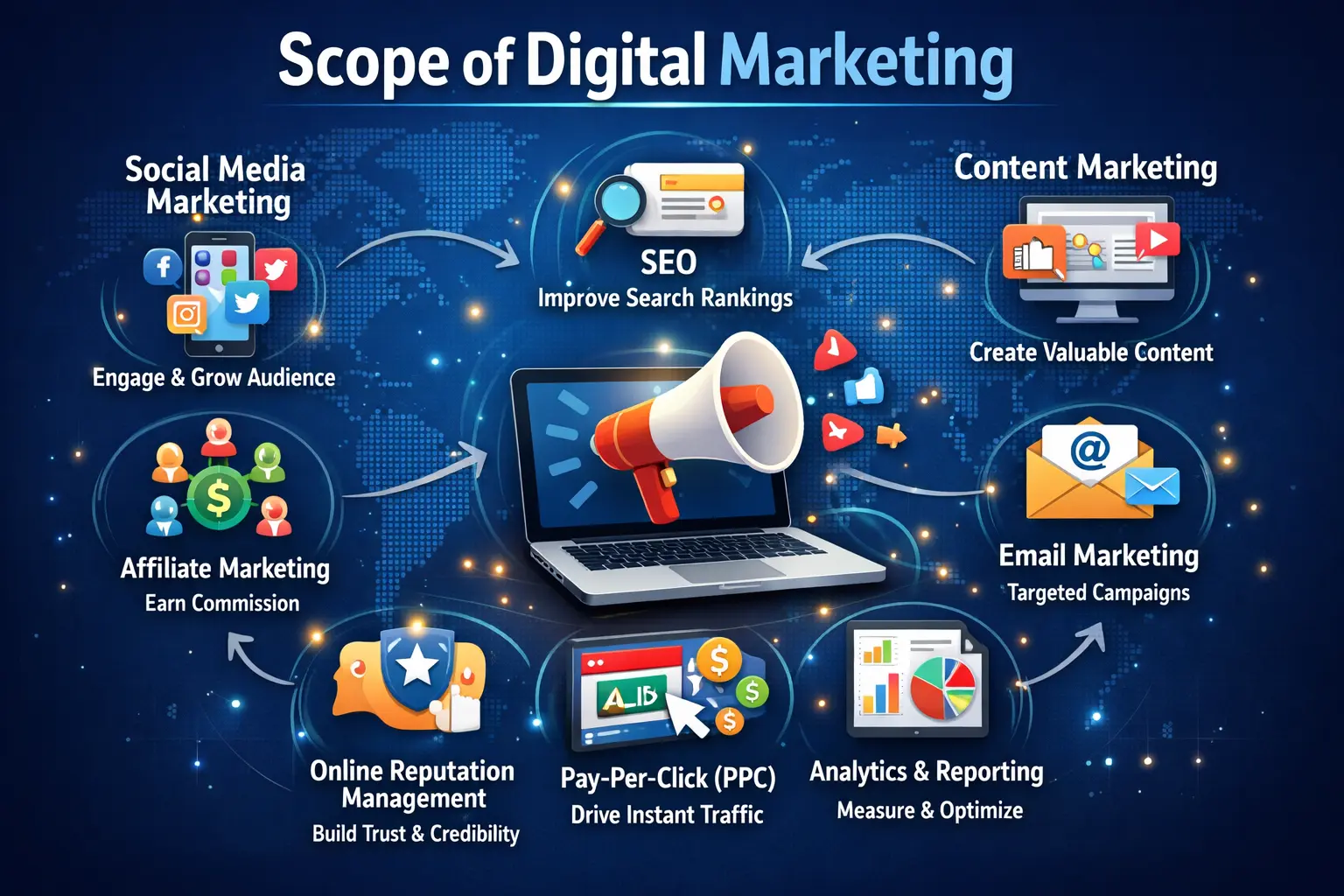
The scope of Digital Marketing has expanded rapidly due to advancements in technology and changing consumer behavior. From small startups to large multinational corporations, organizations rely on Digital Marketing strategies to build brand awareness, generate leads, and increase sales. This growing dependence highlights the vast scope and long-term importance of Digital Marketing in the modern business
Digital Marketing is the practice of promoting products, services, and brands through digital channels such as search engines, websites, social media platforms, email, and mobile applications. In today’s technology-driven world, Digital Marketing has become an essential tool for businesses to connect with their target audience in a faster, more effective, and measurable way. As internet usage and smartphone penetration continue to grow, Digital Marketing is replacing traditional marketing methods and reshaping how businesses communicate, compete, and grow in the global marketplace.
Evolution of Digital Marketing
The journey of Digital Marketing began with the introduction of the internet in the 1990s. Initially, marketing efforts were limited to simple websites and email communication. Over time, search engines, social media platforms, and advanced analytics tools transformed the Digital Marketing landscape.
Today, Digital Marketing includes multiple channels such as Search Engine Optimization (SEO), Social Media Marketing (SMM), Content Marketing, Pay-Per-Click (PPC) advertising, and influencer marketing. The evolution of artificial intelligence, big data, and automation has further increased the scope of Digital Marketing, making campaigns more personalized and results-driven.
Importance of Digital Marketing in the Modern Business World
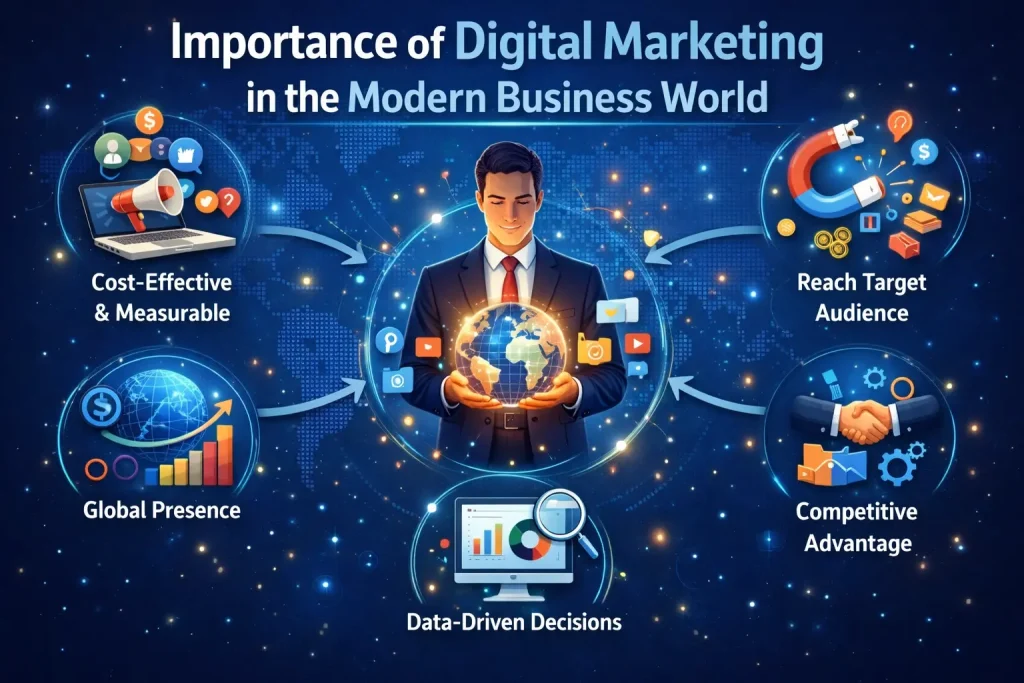
Digital Marketing plays a crucial role in the success of modern businesses. Unlike traditional marketing, it allows companies to reach a global audience at a lower cost. Businesses can measure performance in real time, analyze consumer behavior, and adjust strategies accordingly.
Some key reasons why Digital Marketing is important include:
- Wider audience reach
- Cost-effective marketing solutions
- Real-time performance tracking
- Improved customer engagement
- Higher conversion rates
Due to these advantages, the scope of Digital Marketing continues to expand across industries such as healthcare, education, retail, finance, and entertainment.
Core Components of Digital Marketing
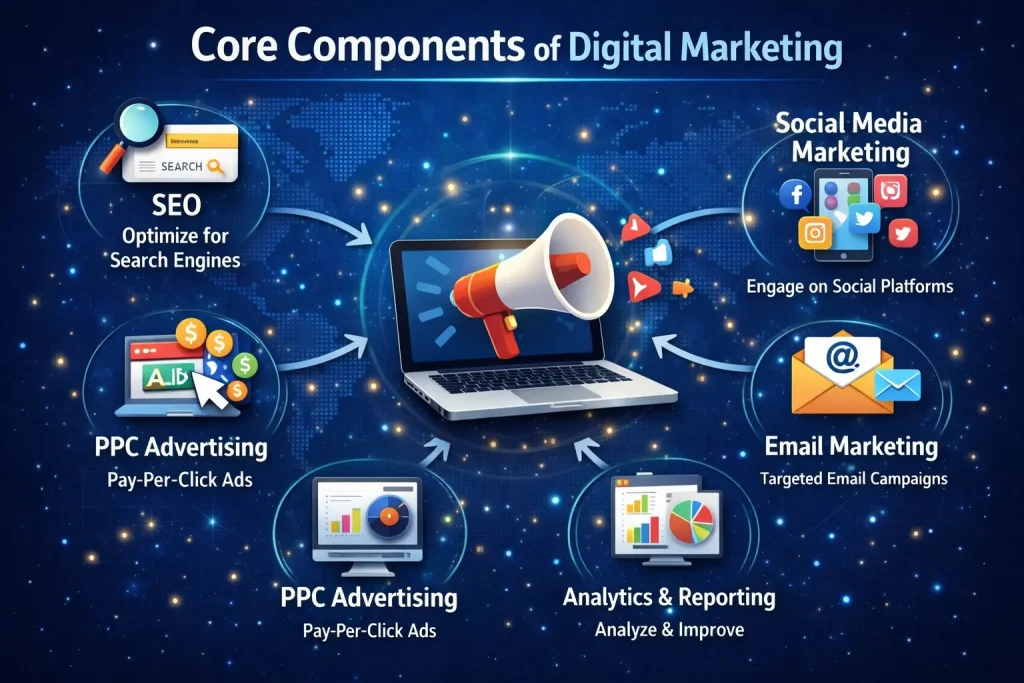
The scope of Digital Marketing covers a wide range of techniques and strategies. Some of the major components include:
1. Search Engine Optimization (SEO)
SEO involves optimizing websites to rank higher on search engines like Google. It helps businesses increase organic traffic and online visibility.
2. Search Engine Marketing (SEM)
SEM includes paid advertising strategies such as Google Ads, where businesses pay to appear at the top of search results.
3. Content Marketing
Content Marketing focuses on creating valuable and relevant content such as blogs, articles, videos, and infographics to attract and engage users.
4. Social Media Marketing (SMM)
Social Media Marketing involves promoting brands on platforms like Facebook, Instagram, LinkedIn, and Twitter to build relationships with customers.
5. Email Marketing
Email Marketing helps businesses communicate directly with customers through personalized emails, newsletters, and promotional campaigns.
Each of these components contributes to the vast scope of Digital Marketing and offers specialized career paths.
Scope of Digital Marketing for Businesses
The scope of Digital Marketing for businesses is immense. It enables companies to establish a strong online presence, compete with larger brands, and reach potential customers efficiently. Businesses can target specific demographics, locations, and interests, making marketing campaigns more effective.
Digital Marketing also supports brand building by maintaining consistent communication across multiple platforms. Small businesses, in particular, benefit from Digital Marketing as it provides affordable marketing solutions and measurable results.
Career Opportunities in Digital Marketing
One of the most attractive aspects of the scope of Digital Marketing is the wide range of career opportunities it offers. With businesses actively seeking digital professionals, Digital Marketing has become a promising career choice.
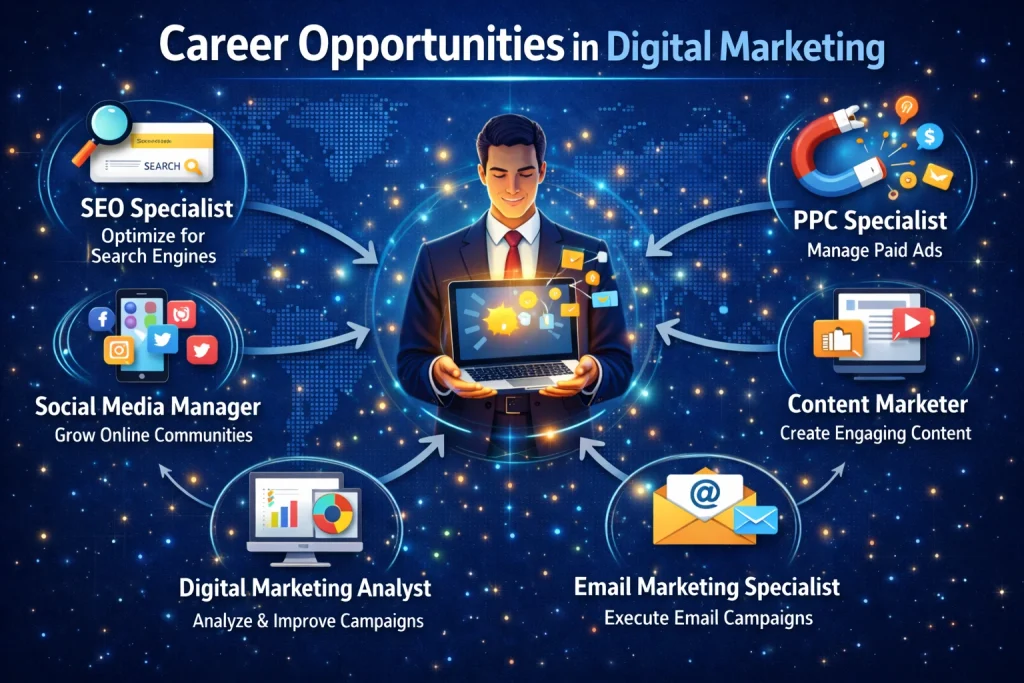
Popular career roles in Digital Marketing include:
- Digital Marketing Manager
- SEO Specialist
- Content Marketer
- Social Media Manager
- PPC Expert
- Email Marketing Specialist
- Digital Analyst
These roles are available across industries, agencies, startups, and multinational companies, making Digital Marketing a versatile career option.
Skills Required for a Career in Digital Marketing
To succeed in the field, professionals need a combination of technical and creative skills. The scope of Digital Marketing demands continuous learning and adaptability.
Key skills include:
- SEO and keyword research
- Content creation and storytelling
- Data analysis and analytics
- Social media strategy
- Paid advertising management
- Communication and creativity
As tools and platforms evolve, professionals must stay updated to remain competitive in the Digital Marketing industry.
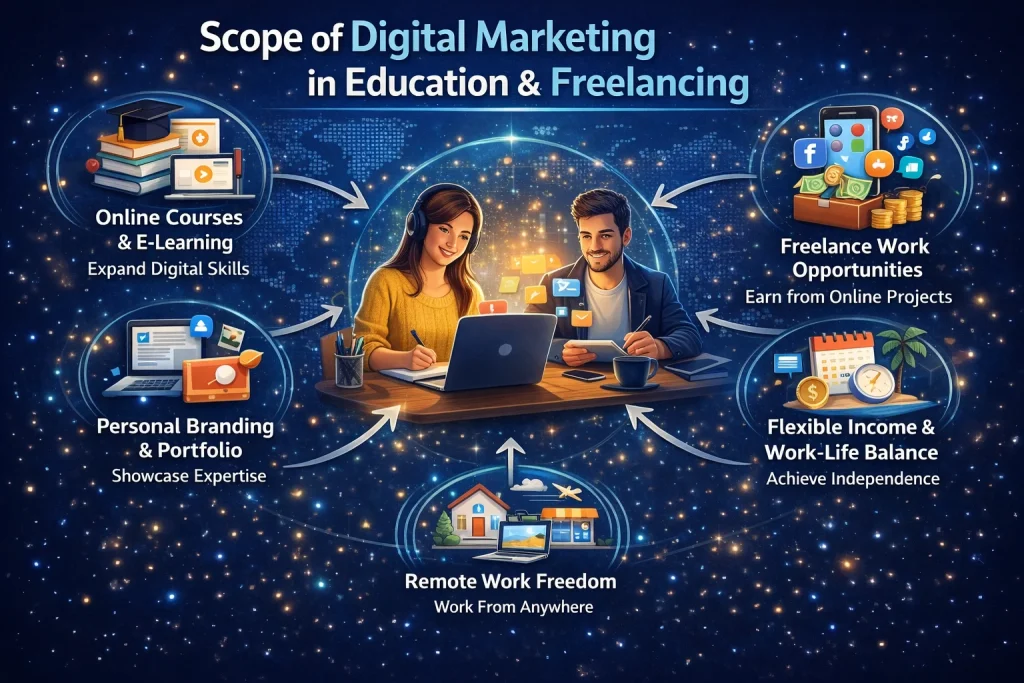
Scope of Digital Marketing in Education and Freelancing
Digital Marketing is not limited to full-time jobs. The scope of Digital Marketing also includes freelancing, consulting, and entrepreneurship. Many professionals work as freelancers, offering services such as SEO, content writing, and social media management.
Educational institutions have also recognized the importance of Digital Marketing and now offer specialized courses, certifications, and degree programs. Online learning platforms have further expanded access to Digital Marketing education worldwide.
Role of Digital Marketing in Global Business Expansion
Digital Marketing allows businesses to expand globally without physical boundaries. Companies can promote products internationally, reach diverse audiences, and analyze market trends across regions.
With multilingual content, localized SEO strategies, and global advertising campaigns, the scope of Digital Marketing in international business growth is continuously increasing.
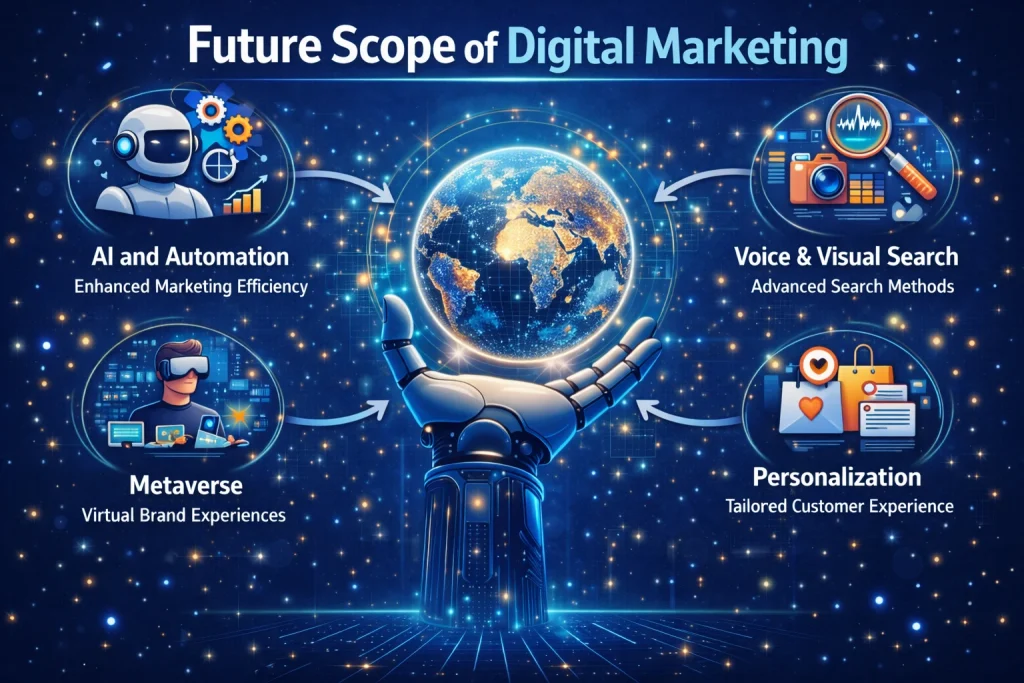
Future Scope of Digital Marketing
The future scope of Digital Marketing is highly promising. Emerging technologies such as artificial intelligence, machine learning, voice search, and augmented reality are reshaping marketing strategies.
Trends that will influence the future of Digital Marketing include:
- AI-driven marketing automation
- Personalized user experiences
- Voice search optimization
- Video and interactive content
- Data-driven decision making
As consumer behavior becomes more digital, the demand for innovative Digital Marketing strategies will continue to grow.
Challenges in Digital Marketing
Despite its vast scope, Digital Marketing also faces challenges such as high competition, frequent algorithm changes, data privacy concerns, and the need for continuous learning. However, these challenges create opportunities for skilled professionals to stand out and innovate.
Advantages of Digital Marketing Over Traditional Marketing
Digital Marketing offers several advantages over traditional marketing methods:
- Better targeting and personalization
- Higher return on investment (ROI)
- Real-time performance measurement
- Global reach
- Improved customer engagement
These advantages further expand the scope of Digital Marketing in today’s competitive market.
Conclusion
The scope of Digital Marketing is vast, dynamic, and continuously evolving. From business growth and brand building to career opportunities and global expansion, Digital Marketing plays a vital role in the modern digital economy. As technology advances and consumer behavior shifts online, Digital Marketing will remain a key driver of success for businesses and professionals alike.
Choosing Digital Marketing as a career or business strategy offers long-term growth, flexibility, and innovation. With the right skills, creativity, and strategic approach, the possibilities within Digital Marketing are endless.