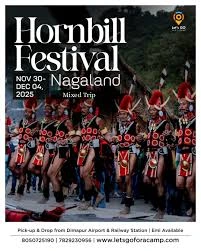
The Hornbill Festival is one of India’s most vibrant and culturally rich celebrations, held annually in the northeastern state of Nagaland. Known as the “Festival of Festivals,” it brings together the diverse tribal communities of Nagaland on a single platform to celebrate their unique traditions, customs, music, dance, crafts, and cuisine. Organized by the Government of Nagaland, the Hornbill Festival has become a major cultural and tourism event, attracting visitors from across India and around the world.
Named after the Hornbill bird, which holds a sacred place in Naga folklore, the festival is more than just a celebration—it is a powerful expression of identity, unity, and heritage.
What Is the Hornbill Festival?
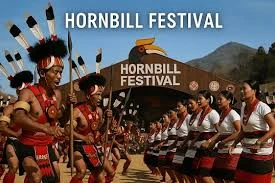
The Hornbill Festival is a multi-day cultural event that showcases the heritage of Nagaland’s major tribes, including Angami, Ao, Konyak, Lotha, Sumi, Chakhesang, Rengma, Phom, Yimkhiung, Zeliang, and others. Each tribe participates by setting up traditional huts, performing folk dances, singing tribal songs, and displaying indigenous art forms.
The festival acts as a living museum where visitors can experience centuries-old traditions in a contemporary setting.
History and Origin of the Hornbill Festival
The Hornbill Festival was first celebrated in the year 2000 with the objective of promoting inter-tribal harmony and preserving Naga culture. Nagaland is home to many tribes, each with its own language, customs, and attire. Before the festival’s inception, these traditions were often practiced in isolation.
The state government conceptualized the festival to create a common platform that would:
- Preserve tribal culture
- Promote tourism
- Encourage unity among Naga tribes
- Showcase Nagaland to the global audience
Since then, the Hornbill Festival has grown into an internationally recognized cultural event.
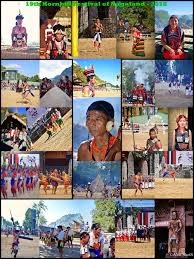
Why Is It Called the Hornbill Festival?
The festival is named after the Hornbill bird, which is deeply revered in Naga culture. The bird symbolizes:
- Prosperity
- Courage
- Grandeur
- High social status
Hornbill feathers were traditionally used in tribal headgear and ceremonial attire. Naming the festival after this majestic bird reflects respect for nature and cultural symbolism deeply embedded in Naga traditions.
When and Where Is the Hornbill Festival Celebrated?
📍 Location
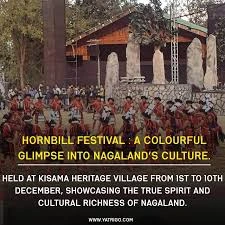
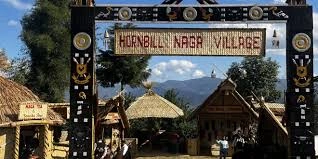
The Hornbill Festival is primarily held at Kisama Heritage Village, located about 12 kilometers from Kohima, the capital of Nagaland.
📅 Dates
The festival usually takes place from 1st December to 10th December every year.
December is chosen because it marks the end of the harvest season and offers pleasant weather, making it ideal for cultural celebrations and tourism.
Cultural Significance of the Hornbill Festival
The Hornbill Festival plays a crucial role in preserving and promoting Naga culture. In an era of rapid modernization, many indigenous traditions face the risk of fading away. This festival helps keep these traditions alive by encouraging younger generations to participate and learn.
Key cultural elements showcased include:
- Traditional attire and ornaments
- Folk music and dances
- Tribal rituals and ceremonies
- Indigenous games and sports
The festival also promotes respect and understanding among different tribes and communities.
Major Attractions of the Hornbill Festival
Traditional Naga Dances and Music
One of the biggest highlights of the Hornbill Festival is the vibrant display of traditional dances and music. Each tribe performs unique dances that tell stories of bravery, harvest, courtship, and community life. Traditional instruments like log drums, bamboo flutes, and mouth harps create an electrifying atmosphere.
Indigenous Food and Naga Cuisine
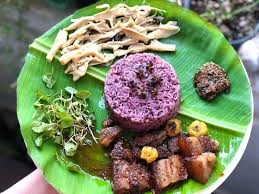
Food lovers find the Hornbill Festival especially exciting. Visitors can taste authentic Naga cuisine, known for its bold flavors and use of local ingredients.
Popular dishes include:
- Smoked pork with bamboo shoot
- Axone (fermented soybean) dishes
- Naga-style fish curry
- Sticky rice and traditional chutneys
Local rice beer, often prepared using age-old methods, is also an integral part of the festival.
Handicrafts and Indigenous Art
The festival is a paradise for those interested in handicrafts and tribal art. Artisans from different tribes display:
- Handwoven shawls
- Bamboo and cane products
- Traditional jewelry
- Wood carvings
Buying these items directly supports local artisans and helps preserve traditional craftsmanship.
Traditional Games and Sports at the Hornbill Festival
The Hornbill Festival features indigenous games that were once part of everyday tribal life. These games not only entertain but also reflect the physical strength and skills valued in Naga society.
Popular traditional sports include:
- Naga wrestling
- Indigenous archery
- Stone-pulling competitions
- Traditional log drum beating contests
These events are often crowd favorites and showcase the competitive spirit of the tribes.
Modern Events and Contemporary Additions
While rooted in tradition, the Hornbill Festival also embraces modern culture. Over the years, several contemporary events have been added, such as:
- Rock and fusion music concerts
- Fashion shows featuring tribal designs
- Cultural exchange programs
- Film screenings and art exhibitions
These additions help bridge the gap between tradition and modernity, making the festival appealing to younger audiences.
Hornbill Festival and Tourism in Nagaland
The Hornbill Festival has significantly boosted tourism in Nagaland. December sees a large influx of domestic and international tourists, photographers, researchers, and cultural enthusiasts.
Benefits to tourism include:
- Increased local employment
- Growth of homestays and eco-tourism
- Promotion of Nagaland as a safe travel destination
- Global recognition of Naga culture
The festival has become the single most important tourism event in the state.
How to Reach the Hornbill Festival
By Air
The nearest airport is Dimapur Airport, well-connected to major Indian cities.
By Train
Dimapur Railway Station is the main railhead, with regular trains from Guwahati and other cities.
By Road
Kohima and Dimapur are connected by road to Assam and neighboring states. From Kohima, Kisama Heritage Village is easily accessible by taxi or local transport.
Best Time to Visit the Hornbill Festival
The best time to visit is during the first week of December, when most major cultural performances take place. Weather during this time is cool and pleasant, making sightseeing enjoyable.
Booking accommodation in advance is highly recommended due to high demand during the festival period.
Tips for Visitors Attending the Hornbill Festival
- Respect local customs and traditions
- Ask permission before photographing people
- Dress comfortably for outdoor events
- Try local food but be mindful of spice levels
- Support local artisans by buying authentic crafts
Following these tips ensures a respectful and enjoyable festival experience.
Sustainable and Cultural Preservation Efforts
The Hornbill Festival also emphasizes sustainability and cultural preservation. Many initiatives encourage:
- Eco-friendly practices
- Plastic-free festival zones
- Preservation of indigenous knowledge
- Promotion of traditional farming and crafts
These efforts ensure that the festival remains environmentally responsible while celebrating heritage.
Conclusion: Why the Hornbill Festival Matters
The Hornbill Festival is more than a cultural event—it is a celebration of identity, unity, and heritage. It brings together diverse tribes, preserves ancient traditions, promotes tourism, and introduces the world to the vibrant culture of Nagaland.
For travelers, cultural enthusiasts, and anyone interested in India’s rich diversity, attending the Hornbill Festival is a truly unforgettable experience. It stands as a shining example of how tradition and modernity can coexist while honoring the past and embracing the future.